Client ::
- City of Sydney Council
Location ::
- Circular Quay, Sydney, NSW
Completed ::
- 1999
Team ::
- Peter Tonkin, Tim Greer, Neil Mackenzie, Roger O'Sullivan, Reini Otter, Amelia Kelly, Jackson Teece Chesterman Willis. Photos by Patrick Bingham-Hall. Photos by Bart Maiorana
Awards ::
- 2000 RAIA Merit Award, Commendation for Conservation 1999 Property Council NSW ‘Development of the Year’
Project Description::
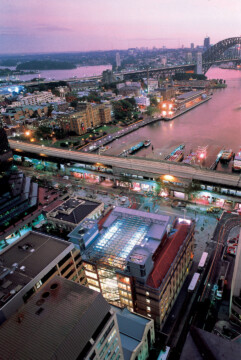
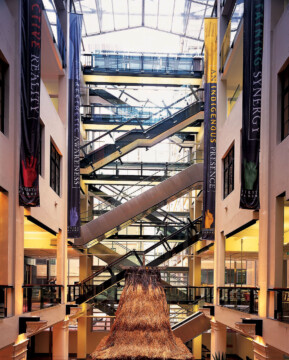
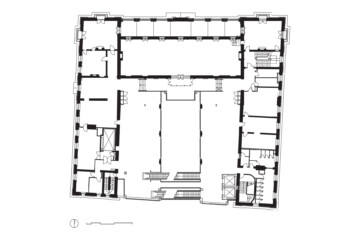
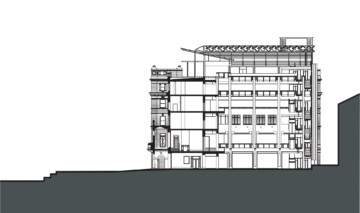
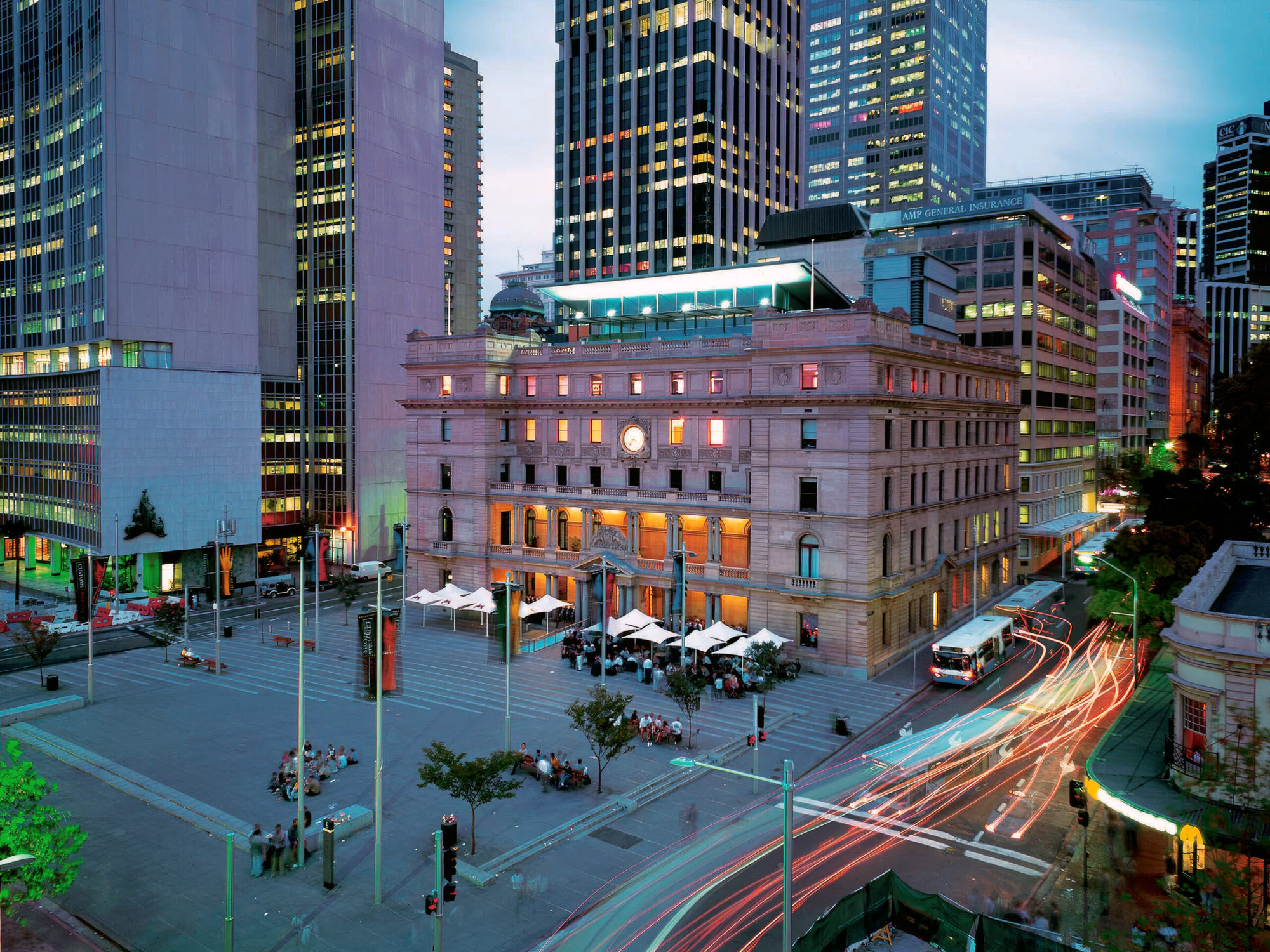
The refurbishment of the historic Customs House at Circular Quay was completed as the major tourism gateway to the City of Sydney prior to the Olympic Games. The six level building houses a variety of different cultural facilities including a city planning model, galleries, a museum, a number of bars and cafes and a restaurant. The project also includes major performance and exhibition spaces with specialised access and acoustic needs.
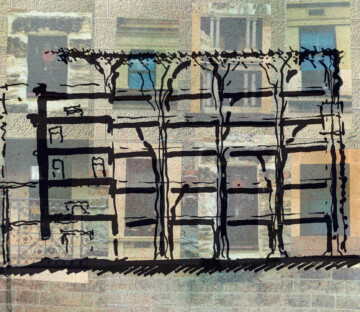
Customs House is a significant heritage building dating from 1845. It was built in successive stages in a variety of differing Classical styles, reaching its pre-renovation stage after he enclosure of its internal court in 1918. The significant 19th Century sandstone fabric was extensively conserved, and unsympathetic additions removed to reveal as much as possible of the original courtyard space. The most important interior spaces were also restored, while other areas were left flexibly serviced for a variety of future cultural uses.
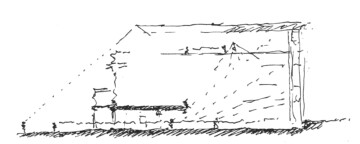
Escalators and new glass lifts created a vertical public promenade, catching unexpected views of the surrounding city through the fully glazed new south wall.
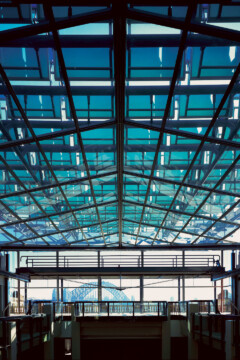
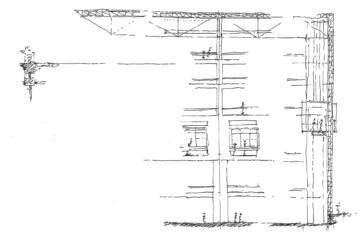
The high level of energy-efficient, environmentally sustainable design achieved for Customs House is unusual for a heritage refurbishment project. The design integrates sophisticated mechanical, lighting and solar control systems to enable virtually the whole building to be naturally ventilated and naturally lit.
The glass roof, floating above the upper levels, bring light deep into the six-storey atrium. Layered glass solar-control blades track the sun throughout the day and year, reacting to overcast and night-time conditions.
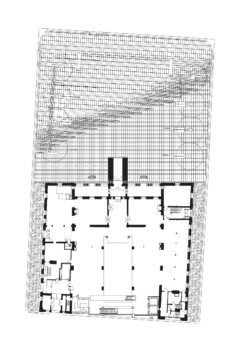
A significant element of the project was the reworking of the Customs House Square. This was the location of the pre-1848 shoreline of Sydney Cove, where European settlers first landed in Australia. The paving of the Square marks this line using the intersection of the building’s axial geometry with that of the adjoining streets.